De Pers Perzische en Oosterse Tapijten
Kilim Kelim Rug - 250x200 cm
Kilim Kelim Rug - 250x200 cm
Couldn't load pickup availability
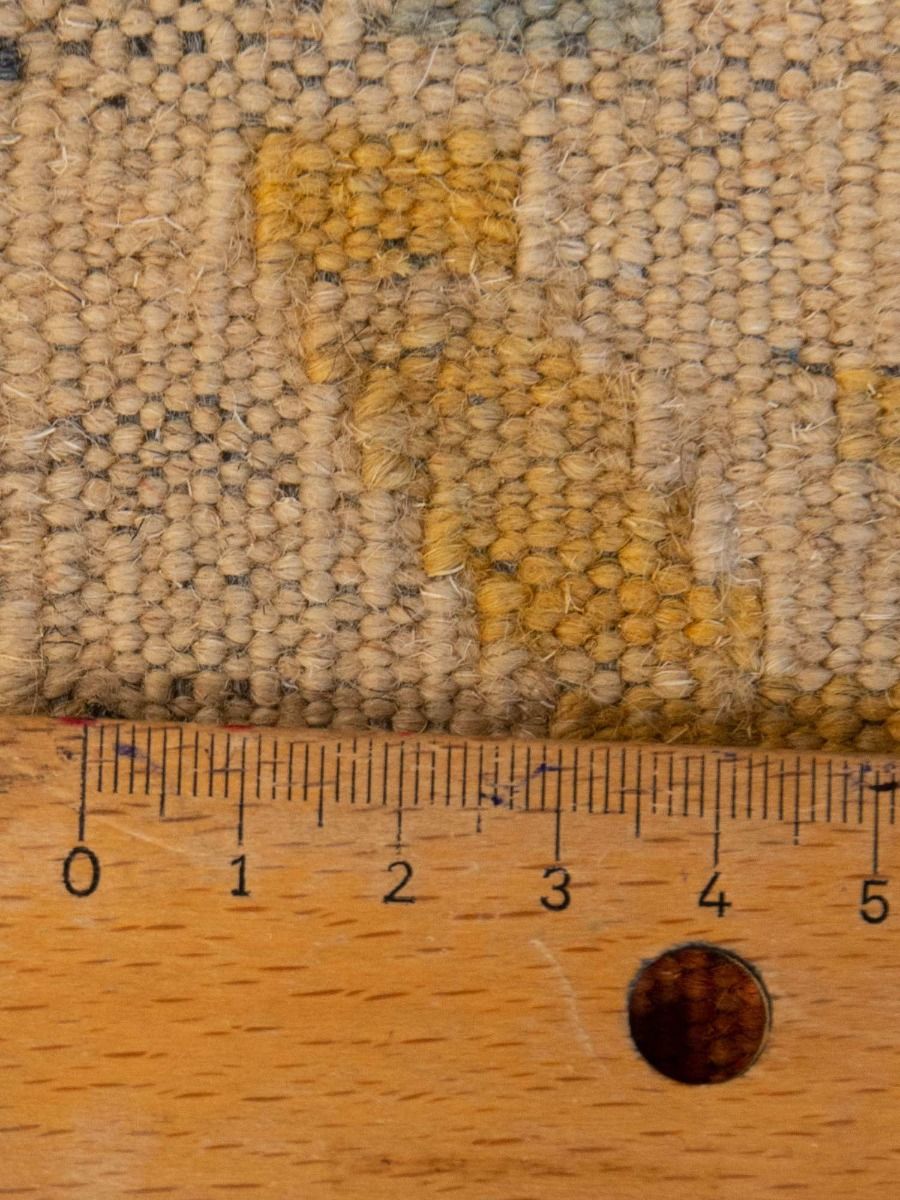
The Kilim (also known as Kelim, Gelim and Gilim) rugs are the most well known of the Oriental flat weaves, similar to the South American Najavo rugs. Their colour comes from the weft which is tightly intertwined with the warp. Rather than an actual pile, the foundation of these rugs gives them their design and colour. The weft is woven between the warp until a new colour is needed, then is looped back round and knotted. Between colours in most Kilim rugs there is a vertical slit, this is created with the weave pulls the warp strings away from each other and is unique to Kilims. This ‘slit woven’ design is loved by collectors who find the sharp etched designs, emphasising the colourful weave, mesmerising. The weft is almost always wool, while the warp can be either cotton or wool. A diagram of a typical gelim weave
A Kilim weaveBecause Kilims take less time to weave than pile-weaves they are generally less expensive. However, the idea of Kilims being considered as somehow less of a rug is a perception that no longer exists. Their recent popularity has driven them to be extremely collectable and their command of cost has risen as a result. Because these rugs are still very much true to their roots and not woven with the export market in mind, a buyer gets a real sense of authenticity, a rug woven with traditional patterns and colours rather than one which may have been standardised or adapted to suit the Western market. Kilims (along with jewellery, clothing and animals) are important for the identity and wealth of nomadic tribe-people. In their traditional setting they are used as floor and wall coverings, horse-saddles, storage bags, bedding and cushion covers. In recent times the production of many of these items has become.
Share